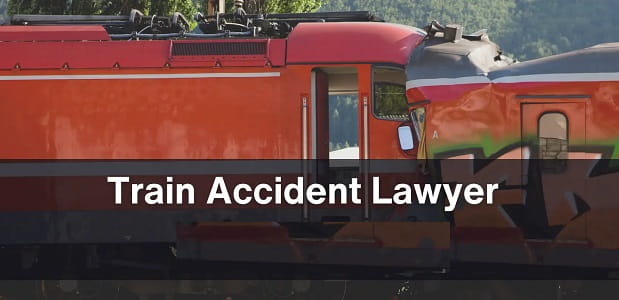
Train accidents — whether involving commuter rail, Amtrak intercity passenger trains, light rail and subway systems, freight trains, or grade crossing collisions — produce injuries and fatalities of extraordinary severity. The mass and speed of rail vehicles create impact forces that no human body is designed to survive at full force, and the resulting injuries — traumatic brain injuries, spinal cord damage, crush injuries, amputations, severe burns, and wrongful death — impose medical costs, disability losses, and family devastation that demand the most skilled and specialized legal advocacy available. Train accident cases are among the most legally complex in personal injury law — involving multiple federal regulatory frameworks, common carrier liability standards, government entity involvement, and defendants with substantial legal resources dedicated to minimizing compensation. Before hiring a train accident lawyer, ask these ten critical questions.
1. Do you specifically handle train and rail accident cases?
Train accident litigation requires specific knowledge of Federal Railroad Administration regulations, the Federal Transit Administration standards governing commuter rail and light rail systems, common carrier liability standards that impose heightened duties of care on passenger train operators, grade crossing safety regulations, National Transportation Safety Board investigation procedures, and the complex jurisdictional issues that arise when government entities operate rail systems. Ask how many train accident cases the attorney has personally handled, what types of rail accidents — passenger trains, grade crossings, subway systems, freight trains — they have the most experience with, and what their record of recovery looks like against major rail operators.
2. Who are all the potentially liable parties in my train accident?
Train accident liability routinely involves multiple parties whose combined insurance coverage substantially exceeds what any single defendant carries. The railroad operator bears liability for negligent train operation and maintenance. The train manufacturer may be liable for mechanical defects in braking, signaling, or structural systems. The entity responsible for track maintenance may share liability for defective roadbed conditions. A crossing signal manufacturer may bear product liability if signal equipment failed. Government entities that own or regulate the infrastructure may share responsibility. Ask the lawyer to map every potentially liable party based on the specific circumstances — each expands the total compensation available.
3. What federal regulations apply to my accident and how do you use them?
The Federal Railroad Administration imposes comprehensive safety regulations on track standards, equipment maintenance, crew training, hours of service, hazardous materials transport, and crossing warning systems — violations of which constitute powerful evidence of negligence per se. Ask how the lawyer investigates and uses FRA regulatory compliance records, what inspection and enforcement history they pursue from the FRA regarding the specific railroad and equipment involved, and how regulatory violations translate into liability findings that strengthen both negligence and punitive damages arguments in rail accident litigation.
4. How does common carrier liability affect my case as a passenger?
Passenger railroads are common carriers — entities that hold themselves out to transport anyone who pays the fare — and the law imposes a heightened duty of care on common carriers beyond ordinary negligence standards. Common carriers must exercise the utmost care and diligence for the safety of passengers. Ask the lawyer how the common carrier standard applies to your specific accident, how it differs from and strengthens your claim compared to ordinary negligence standards, and what evidence most effectively establishes that the railroad failed to meet the heightened care obligation it owed to passenger safety.
5. Is a government entity involved and what special requirements apply?
Many commuter rail, light rail, subway, and Amtrak-operated services involve government entities — and claims against government-operated rail systems trigger the procedural requirements of government tort claims acts, which impose strict written notice deadlines — sometimes as short as 60 to 180 days from the accident — and may limit available damages through statutory caps. Ask immediately whether any government entity operates or owns any component of the rail system involved in your accident, what notice filing requirements apply, and what the deadline is. Missing government claim notice deadlines can permanently eliminate otherwise strong claims.
6. How do you work with the NTSB investigation?
The National Transportation Safety Board investigates significant rail accidents — and while NTSB reports are not directly admissible as liability evidence in civil proceedings, the investigation generates technically analyzed factual findings, witness interviews, and documentary evidence that profoundly inform civil litigation strategy. Ask how the lawyer participates in NTSB investigation processes, what independent technical experts they deploy alongside the official investigation, and how NTSB factual findings and probable cause determinations are used to advance civil liability theories against the railroad and other responsible parties.
7. What technical experts do you work with in train accident cases?
Train accident litigation requires expert testimony across multiple technical disciplines — railroad safety experts, mechanical engineers specializing in rail vehicle systems, track engineering specialists, grade crossing design experts, signal systems engineers, accident reconstruction specialists, and biomechanical experts for injury causation analysis. Ask what specific technical experts the lawyer regularly works with, how those experts are selected for different accident types, and whether they have experience presenting highly technical rail safety evidence in accessible terms that judges and juries find compelling.
8. What damages are available in my train accident case?
Train accident damages include all current and future medical expenses, long-term rehabilitation costs, lost wages and earning capacity, pain and suffering, emotional distress, and permanent disability compensation. For wrongful death cases, damages include the deceased’s lost lifetime earnings, loss of companionship and parental guidance, and funeral expenses. In cases involving egregious safety violations — railroads that knowingly operated defective equipment or ignored safety warnings — punitive damages may be available. Ask the lawyer to walk through every applicable damage category and what the realistic total recovery range looks like given the severity of your injuries and the available liable parties.
9. What evidence must be preserved immediately after a train accident?
Train accident evidence is critically time-sensitive — event recorder data from the locomotive, cab signal data, dispatcher radio communications, crew qualification records, track inspection records, and grade crossing signal maintenance logs must all be legally preserved before routine data overwriting or document destruction cycles eliminate them. Ask what immediate evidence preservation steps the lawyer takes upon retention — specifically how quickly they send preservation letters to all rail operators and governmental entities, what independent inspection they arrange for any defective equipment, and how they obtain NTSB and FRA investigation records as they become available.
10. Do you have the resources to fund complex rail accident litigation through trial?
Train accident litigation against major rail operators — who maintain dedicated legal defense teams and substantial litigation budgets — is extraordinarily expensive. Technical experts across multiple disciplines, NTSB record acquisition, extensive documentary discovery, and prolonged pre-trial proceedings create costs that can reach several hundred thousand dollars before any case reaches trial. Ask whether the firm has the financial capacity to sustain complex rail accident litigation through trial without pressure to accept inadequate early settlements motivated by cost constraints. A firm unable to fund full litigation against a well-capitalized railroad cannot achieve maximum recovery for victims with lifetime care needs.
FAQs — Hiring a Train Accident Lawyer
Q1. What is the most important thing to do immediately after a train accident?
A: Seek emergency medical treatment immediately, document the scene and injuries with photographs if possible, identify witnesses, do not give recorded statements to railroad representatives before consulting a lawyer, and contact a train accident lawyer as quickly as possible to initiate evidence preservation before critical data is overwritten.
Q2. Can I sue Amtrak if injured on a passenger train?
A: Yes — but Amtrak is a federally chartered corporation with specific liability limitations and procedural requirements for certain claims that differ from standard railroad litigation. An experienced train accident lawyer will evaluate the specific Amtrak liability framework applicable to your accident circumstances.
Q3. What is a grade crossing accident and who is liable?
A: A grade crossing accident occurs when a vehicle collides with a train at a road-rail intersection. Liability may involve the railroad’s crossing signal maintenance obligations, the governmental entity responsible for crossing design, the signal equipment manufacturer, and potentially the vehicle driver — requiring multi-party liability analysis specific to the crossing’s design and warning system history.
Q4. How long do I have to file a train accident lawsuit?
A: Standard personal injury statutes of limitations of 2-3 years apply in most states for private railroad claims. Claims against government-operated rail systems often require formal written notice within 60-180 days of the accident — a much shorter deadline that must be met regardless of when a lawsuit is ultimately filed.
Q5. What is event recorder data and why is it critical in train accident cases?
A: An event recorder — sometimes called a locomotive black box — continuously records speed, throttle position, braking application, and crew inputs in the minutes before an accident. This data is among the most valuable evidence in establishing how the accident occurred and whether the crew or equipment performed as required — making immediate preservation requests essential.