Semi truck accidents — involving fully loaded tractor-trailers weighing up to 80,000 pounds — produce destruction on a scale that passenger vehicle accidents rarely approach. When an 80,000-pound commercial vehicle collides with a passenger car, the occupants of that car face catastrophic and often fatal consequences. What follows is not a simple insurance claim — it is a complex, high-stakes legal battle against trucking companies with experienced legal teams, massive insurance coverage, and a financial incentive to minimise what they pay injured victims and grieving families. Semi truck accident cases require a lawyer with specific trucking litigation expertise, substantial resources to investigate complex scenes, and the trial experience to take on well-funded defendants. Before hiring anyone, ask these ten essential questions.
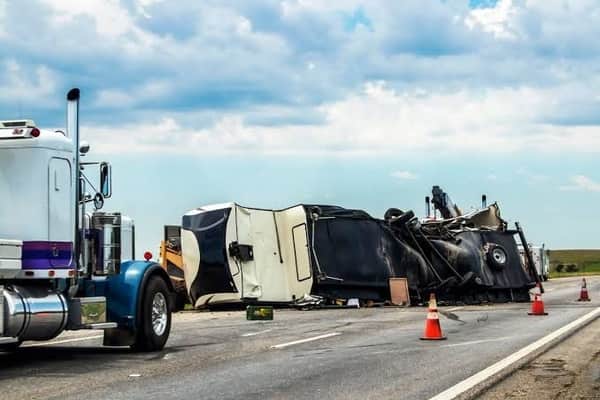
Do you specifically handle semi truck and commercial vehicle accident cases?
Semi truck accident litigation is fundamentally different from standard car accident law — it involves FMCSA regulations, hours of service compliance, electronic logging device analysis, black box data interpretation, cargo securement standards, driver qualification file review, and multi-party liability structures that general personal injury lawyers simply are not equipped to navigate effectively. Ask how many semi truck accident cases the attorney has personally handled, what their results look like against major carriers and their insurers, and whether they have litigation experience specific to commercial trucking cases.
Who are all the potentially liable parties in a semi truck accident?
Semi truck accident liability extends well beyond the driver. The trucking company bears vicarious liability for the driver’s conduct and independent liability for negligent hiring, inadequate training, unrealistic delivery schedules that promote fatigue, and vehicle maintenance failures. The cargo shipper or loader may be liable for improperly secured freight that shifted and caused loss of control. The truck manufacturer may be liable for mechanical defects. The freight broker may share responsibility for unsafe routing decisions. Ask the lawyer to identify every potentially liable party — each expands the available insurance coverage and total compensation.
What FMCSA regulations are relevant to my case?
The Federal Motor Carrier Safety Administration establishes comprehensive regulations governing hours of service, driver qualification and licensing, drug and alcohol testing, vehicle inspection and maintenance standards, cargo securement, and electronic logging device requirements for commercial carriers. Violations of FMCSA regulations constitute powerful evidence of negligence per se — the legal doctrine that treats safety regulation violations as automatic evidence of negligence. Ask how the lawyer uses FMCSA compliance records and violation history to build the regulatory negligence component of your case.
How quickly do you act to preserve critical truck accident evidence?
Semi truck accident evidence is extraordinarily time-sensitive. The truck’s Electronic Control Module — containing speed, braking, and engine data from the moments before impact — can be overwritten. Electronic logging device records showing hours of service violations have limited retention periods. Dashcam footage is routinely deleted. The trucking company’s maintenance and inspection records, driver qualification files, and drug test results must be legally preserved immediately. Ask whether the lawyer will send a preservation letter within 24 to 48 hours of retention and what immediate investigative steps they take.
How do you investigate the truck driver’s hours of service compliance?
Driver fatigue is one of the leading causes of semi truck accidents — and the federal hours of service regulations exist specifically to prevent dangerously exhausted drivers from operating commercial vehicles. Ask how the lawyer obtains and analyses the electronic logging device data, paper logbooks if applicable, fuel receipts, toll records, and GPS data that can establish whether the driver was operating in violation of hours of service restrictions at the time of the accident. Evidence of hours of service violations significantly strengthens both the negligence claim and potential punitive damages arguments.
What is my case potentially worth given the severity of the injuries?
Semi truck accidents frequently cause catastrophic injuries — traumatic brain injuries, spinal cord injuries, amputations, severe burns, and fatalities — generating damages that can reach seven or eight figures in serious cases. Ask the lawyer for a realistic, evidence-based assessment of your case’s value covering all economic damages — current and future medical expenses, lost earning capacity, long-term care needs — and all non-economic damages including pain, suffering, and loss of enjoyment of life. In cases involving gross corporate negligence, punitive damages may also dramatically expand the total recovery.
How do you handle trucking company and insurer tactics to minimise liability?
Trucking companies and their insurers dispatch rapid-response teams to accident scenes within hours — collecting evidence, photographing the scene, interviewing witnesses, and building their defence before you have even spoken to a lawyer. Ask how the attorney counters these early-response advantages, how they use the plaintiff’s own rapid investigation to neutralise the trucking company’s head start, and what specific strategies they employ to prevent critical evidence from being controlled exclusively by the defendant.
Does the trucking company’s safety record support punitive damages?
Trucking companies with histories of safety violations, prior accident records, regulatory citations, and demonstrated disregard for driver safety may face punitive damage exposure — damages designed to punish corporate misconduct rather than simply compensate the victim. Ask the lawyer how they investigate the trucking company’s safety history, what records they subpoena, and whether the facts of your case support a punitive damages claim that could substantially increase the total recovery.
Have you taken semi truck accident cases to trial and won?
Trucking companies and their insurers invest enormous resources in litigation — specifically because they know that the complexity and cost of semi truck cases pressures injured parties and their lawyers into accepting inadequate settlements. A semi truck accident lawyer with genuine trial experience and documented jury verdicts against major carriers negotiates from a fundamentally stronger position. Ask specifically how many semi truck accident cases they have personally tried, what the verdicts were, and under what circumstances they recommend trial over settlement.
What resources do you have to finance a complex semi truck case through trial?
Semi truck accident litigation is expensive — accident reconstruction experts, biomechanical engineers, FMCSA compliance specialists, trucking industry safety experts, medical experts, and life care planners all contribute to a litigation budget that can exceed six figures before a case reaches trial. Ask whether the firm has the financial resources to fund a complex case through trial without pressure to accept an early inadequate settlement driven by inability to sustain litigation costs.
FAQs — Hiring a Semi Truck Accident Lawyer
Q1. How is a semi truck accident case different from a regular car accident claim?
A. Semi truck cases involve FMCSA regulations, multiple liable parties, much larger insurance policies, specialised evidence including ELD and black box data, and trucking company rapid-response teams that begin building their defence at the accident scene immediately.
Q2. What is the minimum insurance coverage for commercial semi trucks?
A. FMCSA requires minimum liability coverage of $750,000 for most freight carriers — rising to $1,000,000 or $5,000,000 for hazardous materials. In practice, most large carriers maintain significantly higher coverage levels.
Q3. Can I sue the trucking company if the driver was an independent contractor?
A. Potentially yes — joint employer theories, lease agreement provisions, and FMCSA statutory employment rules can establish the trucking company’s liability for independent contractor drivers depending on the specific relationship and regulatory framework.
Q4. What is a spoliation letter in a semi truck accident case?
A. A formal legal notice sent to the trucking company and all relevant parties demanding preservation of all evidence — black box data, ELD records, dashcam footage, maintenance logs, and driver files — preventing evidence destruction that would otherwise occur through routine data overwriting.
Q5. How long does a semi truck accident lawsuit typically take?
A. Complex semi truck cases with serious injuries typically take 2-4 years from filing to resolution — though cases with clear liability and cooperative defendants may settle faster. Trial-bound cases against large carriers commonly extend beyond three years.