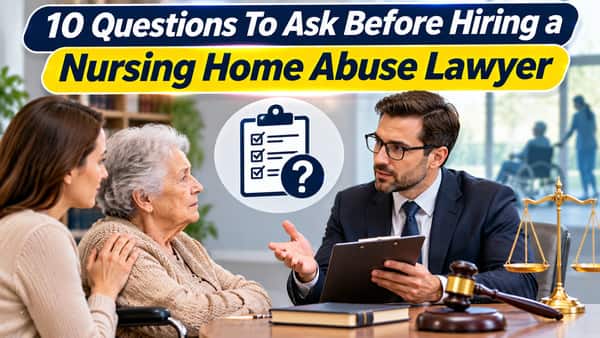
When a family member enters a nursing home or assisted living facility, they are placed in the care of people they trust to protect their dignity, safety, and wellbeing. Discovering that trust has been violated — through physical abuse, emotional mistreatment, financial exploitation, sexual assault, or life-threatening neglect — is one of the most devastating experiences a family can face. What makes nursing home abuse cases particularly urgent is that victims are frequently unable to report or even communicate what has happened to them, leaving families to piece together what occurred from physical evidence, medical records, and the testimonies of other residents and staff. You need a lawyer who understands this deeply and knows how to fight for your loved one. Before hiring anyone, ask these ten critical questions.
Do you specifically handle nursing home abuse and neglect cases?
Nursing home litigation requires a lawyer who understands long-term care regulations, the federal requirements of the Nursing Home Reform Act, state-specific licensing standards, and how to build cases where the primary victim may be cognitively impaired, nonverbal, or deceased. Ask how many nursing home abuse cases the attorney has handled and how those cases resolved. A lawyer who focuses on elder abuse litigation brings directly applicable expertise in evidence gathering, regulatory violations, and the tactics that institutional defendants and their insurers routinely deploy to avoid accountability.
How do you investigate nursing home abuse and neglect?
Nursing home facilities are notoriously resistant to releasing internal documentation — staffing records, incident reports, surveillance footage, medication administration logs, and care plan records must often be legally compelled. Ask how the attorney investigates these cases — specifically whether they use nursing home negligence experts, geriatric care specialists, and forensic medical consultants to review records and identify systemic failures. A thorough investigation is the foundation of every successful nursing home abuse claim.
What types of abuse and neglect have you successfully prosecuted?
Nursing home harm takes many forms — physical abuse by staff, sexual assault, emotional abuse, financial exploitation, bedsore neglect, malnutrition and dehydration, medication errors, fall-related injuries from inadequate supervision, and wrongful death. Ask the lawyer whether they have specific experience with the type of harm your loved one suffered. A lawyer with a strong record in cases involving the specific abuse your family member experienced brings refined expertise that a generalist cannot match.
Who are the liable parties beyond the individual caregiver?
Nursing home abuse is rarely the result of a single rogue employee acting alone. The facility itself is typically the primary defendant — liable for negligent hiring, inadequate staff training, chronic understaffing, failure to conduct background checks, and systemic failure to monitor resident safety. The management company that operates the facility, private equity owners, and corporate parent entities may all share liability. Ask the lawyer how they plan to investigate and pursue the full institutional accountability chain — because corporate defendants have significantly larger insurance coverage than individual employees.
How do you handle the unique evidentiary challenges in these cases?
Evidence in nursing home abuse cases is frequently controlled by the defendant — the facility holds the records that prove their own wrongdoing. Ask how the attorney ensures that critical evidence is preserved before it can be altered or destroyed, how they legally compel the production of staffing ratios, incident reports, care plans, and surveillance footage, and how they work with expert witnesses to interpret complex medical and regulatory evidence for a judge or jury.
What damages can our family recover?
Nursing home abuse damages include the victim’s past and future medical expenses for abuse-related treatment, pain and suffering, emotional distress, costs of transferring to a new facility, and in cases of wrongful death, funeral costs and the family’s loss of companionship. In cases involving knowing or reckless disregard for resident safety — particularly by profit-driven corporate facilities — punitive damages may also be available. Ask the lawyer to walk through every applicable damage category for your specific situation.
Do you work on a contingency fee basis?
Most nursing home abuse lawyers work on contingency — meaning no upfront fees, with the attorney receiving a percentage of the settlement or verdict only if they win. Ask specifically what percentage applies, whether it increases at trial, how case expenses are handled, and what financial obligations your family would have if the case is unsuccessful. Get all fee terms in writing before signing any retainer agreement.
Has the facility been cited for regulatory violations?
Nursing home inspection reports and regulatory citation histories are public records in most states. An experienced nursing home abuse attorney will have already researched this before your consultation — or will do so immediately. Ask whether the facility has a history of citations for understaffing, abuse, neglect, or care quality violations. A pattern of prior regulatory violations significantly strengthens a negligence claim and may support punitive damages.
Have you taken nursing home cases to trial?
Large nursing home chains and their insurers frequently adopt aggressive litigation strategies — hoping that the complexity and cost of litigation will pressure families into accepting inadequate settlements. Ask how many nursing home abuse cases the attorney has personally taken to trial, what the outcomes were, and how they approach cases where defendants refuse to make fair settlement offers. Trial experience and documented jury verdicts give your lawyer genuine negotiating leverage.
How will you keep our family informed throughout the process?
Nursing home abuse cases involving serious injuries or wrongful death can take one to three years to resolve. During that time, a grieving family needs consistent, compassionate, and proactive communication about case developments. Ask how frequently they provide updates, how quickly they respond to questions, whether a dedicated case manager is available, and how they balance legal advocacy with sensitivity to the family’s ongoing emotional experience.
FAQs — Hiring a Nursing Home Abuse Lawyer
Q1. How do I know if my loved one is experiencing nursing home abuse?
A. Warning signs include unexplained injuries, sudden weight loss, bedsores, fearfulness around staff, unusual financial transactions, and changes in mood or behaviour. Act immediately if you notice these signs.
Q2. Can I sue a nursing home if my loved one has dementia and cannot testify?
A. Yes — medical records, care plans, expert testimony, and staff records can establish abuse and neglect without the victim’s direct testimony. Many successful cases are built entirely on documentary and expert evidence.
Q3. How long do I have to file a nursing home abuse lawsuit?
A. Statutes of limitations vary by state — typically 2-3 years from discovery of the abuse. In wrongful death cases, the timeline runs from the date of death. Contact a lawyer immediately.
Q4. Can a nursing home be held accountable for abuse by a staff member?
A. Yes — nursing homes are liable for negligent hiring, inadequate training, and failure to supervise staff, making the facility itself the primary defendant regardless of who committed the act.
Q5. Should I report nursing home abuse to authorities before consulting a lawyer?
A. Yes — report to Adult Protective Services and your state’s long-term care ombudsman immediately. A lawyer will advise you on simultaneous civil action while protecting the integrity of any parallel investigation.