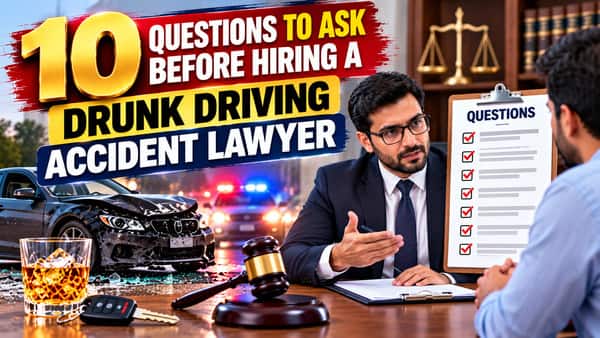
Being seriously injured by a drunk driver is one of the most infuriating and devastating experiences a person can endure — because it is entirely preventable. Every drunk driving accident represents a conscious, voluntary decision by someone who knew the danger they were creating and chose to get behind the wheel anyway. The injuries that follow — traumatic brain injuries, spinal cord damage, multiple fractures, internal organ trauma, and in too many cases death — are not accidents in any meaningful sense. They are consequences of inexcusable negligence that the law recognises as deserving of full and substantial compensation. Drunk driving accident cases are stronger than many other injury claims precisely because of the defendant’s intentional misconduct — but they also involve unique legal dimensions that require a lawyer with specific experience. Before hiring anyone, ask these ten essential questions.
Do you specifically handle drunk driving accident cases?
Drunk driving accident cases involve DUI criminal proceedings running parallel to civil personal injury litigation, dram shop liability claims against establishments that served the intoxicated driver, punitive damages arguments based on the intentional nature of the misconduct, and the interaction between criminal evidence and civil discovery that requires careful strategic management. Ask how many drunk driving accident cases the attorney has personally handled and what their results look like. A lawyer who regularly represents victims of drunk drivers brings directly applicable expertise in every dimension of these cases.
How do you pursue dram shop liability alongside claims against the driver?
Dram shop laws — which impose liability on bars, restaurants, and other establishments that serve alcohol to visibly intoxicated patrons who subsequently cause accidents — can dramatically expand the insurance coverage available to injured victims beyond the individual driver’s personal policy. Many drunk drivers have minimal or inadequate insurance coverage, making dram shop claims against commercial establishments with substantial insurance policies critically important for serious injury compensation. Ask whether dram shop laws apply in your state, how the lawyer investigates and builds the dram shop claim, and what evidence — surveillance footage, purchase records, server testimony — they use to establish the establishment’s liability.
How do you use the drunk driver’s criminal case to benefit my civil claim?
A DUI criminal prosecution running parallel to your civil claim creates evidentiary opportunities — police reports documenting the driver’s intoxication, field sobriety test results, blood alcohol level evidence, witness statements taken at the scene, and ultimately a criminal conviction that cannot be contradicted in the civil case. Ask how the lawyer coordinates civil strategy with the parallel criminal proceedings, how they obtain and use criminal case evidence in the civil litigation, and what happens to the civil case if the drunk driver’s criminal charges are reduced or dismissed for reasons unrelated to the underlying facts.
Are punitive damages available in my drunk driving accident case?
Driving while intoxicated is not ordinary negligence — it is volitional, reckless conduct that courts in most states treat as meeting the legal standard for punitive damages. Unlike compensatory damages, punitive damages are designed to punish the defendant and deter others — and in drunk driving cases they can be substantially larger than the underlying compensatory award. Ask whether punitive damages are available in your state for drunk driving injury claims, what the evidentiary standard for punitive damages is, and whether the driver’s prior DUI history strengthens the punitive damages argument.
What damages can I recover beyond my immediate medical expenses?
Drunk driving accident damages are comprehensive — all current and future medical expenses, long-term rehabilitation costs, lost wages during recovery, permanent earning capacity reduction for serious injuries, property damage, pain and suffering, emotional distress, and in cases of fatality, wrongful death damages including loss of companionship and financial support. Ask the lawyer to walk through every applicable damage category for your specific injuries and how they plan to document and present each one for maximum recovery. In cases involving serious injury or death, the combination of compensatory and punitive damages can be substantial.
How do you investigate the drunk driver’s background and prior DUI history?
A drunk driver with prior DUI convictions, prior alcohol-related violations, or a documented pattern of impaired behaviour presents a significantly stronger punitive damages case than a first-time offender — and prior incidents involving the same commercial establishment strengthen dram shop claims substantially. Ask how the lawyer investigates the driver’s complete history — through criminal record searches, DMV records, civil litigation databases, and discovery aimed at the driver’s prior alcohol-related incidents — and how that history is incorporated into the damages and liability strategy.
How do you handle cases where the drunk driver has minimal insurance?
Many drunk drivers are underinsured or carry only the state-mandated minimum liability coverage — which is frequently inadequate to compensate serious injuries. Ask how the lawyer identifies all potential recovery sources when the driver’s coverage is insufficient — uninsured and underinsured motorist coverage under your own policy, dram shop claims against serving establishments, employer liability if the driver was in the course of employment, and any other potentially liable parties. Maximum recovery in drunk driving cases often requires pursuing multiple sources simultaneously.
How does the drunk driver’s criminal plea or conviction affect my civil case?
If the drunk driver pleads guilty to DUI or is convicted at trial, that conviction is powerful evidence in the civil case — admissible in most jurisdictions as proof of the underlying conduct and eliminating the defendant’s ability to contest the facts established by the criminal judgment. Ask how the lawyer uses criminal convictions or guilty pleas to strengthen the civil case, how they coordinate timing between the criminal and civil proceedings to maximise the evidential benefit, and what strategy they employ if the criminal case resolves unfavourably.
How do you communicate with clients during both the criminal and civil proceedings?
Drunk driving accident victims are simultaneously navigating physical recovery, financial stress, potential involvement in criminal proceedings as complaining witnesses, and the civil litigation process — all while dealing with the emotional aftermath of a preventable, traumatic event. Ask how the lawyer supports clients through both dimensions of the legal process, how frequently they communicate about developments in each proceeding, and whether they can explain the interaction between criminal and civil proceedings in clear terms that allow you to make informed decisions at every stage.
What is my case realistically worth and what timeline should I expect?
Ask the lawyer for a realistic, evidence-based assessment of your case’s value — covering all economic and non-economic damages plus any applicable punitive damages — and a realistic timeline for resolution. Drunk driving cases with clear liability and strong criminal evidence often settle faster than disputed liability cases, but cases involving serious injury or wrongful death may take one to three years to fully resolve. Understanding the timeline and realistic value helps you make informed decisions about settlement offers versus continued litigation throughout the process.
FAQs — Hiring a Drunk Driving Accident Lawyer
Q1. Can I sue a bar or restaurant that served the drunk driver who hit me?
A. Potentially, yes. In states with dram shop liability laws, a bar, restaurant, or other establishment may be held civilly liable in certain circumstances for serving alcohol to a visibly intoxicated person who later causes an accident. The exact requirements vary significantly by state.
Q2. Does a drunk driver’s criminal conviction guarantee I will win my civil case?
A. No. A criminal conviction can provide important evidence in a related civil case, but it does not automatically establish every element necessary to recover compensation. The injured person must still establish issues such as causation and the damages resulting from the accident, subject to the applicable state’s law.
Q3. What is the difference between compensatory and punitive damages in drunk driving cases?
A. Compensatory damages are intended to compensate an injured person for losses such as medical expenses, lost income, and pain and suffering. Punitive damages are intended to punish particularly wrongful conduct and deter similar behaviour. Whether punitive damages are available in a drunk-driving case depends on the law of the state and the specific facts.
Q4. What if the drunk driver was using a company vehicle at the time of the accident?
A. The employer may potentially face vicarious liability if the driver was acting within the scope of employment when the accident occurred. Whether the employer is liable depends on factors such as the driver’s duties, purpose of the trip, and applicable state law.
Q5. How long do I have to file a civil lawsuit against a drunk driver?
A. The deadline depends on the statute of limitations in the state where the claim arises. Many states provide a period of around two or three years for personal injury claims, but some deadlines can be shorter or longer. Dram shop claims may also have separate requirements or deadlines, and a related criminal case does not necessarily extend the time available to file a civil claim.